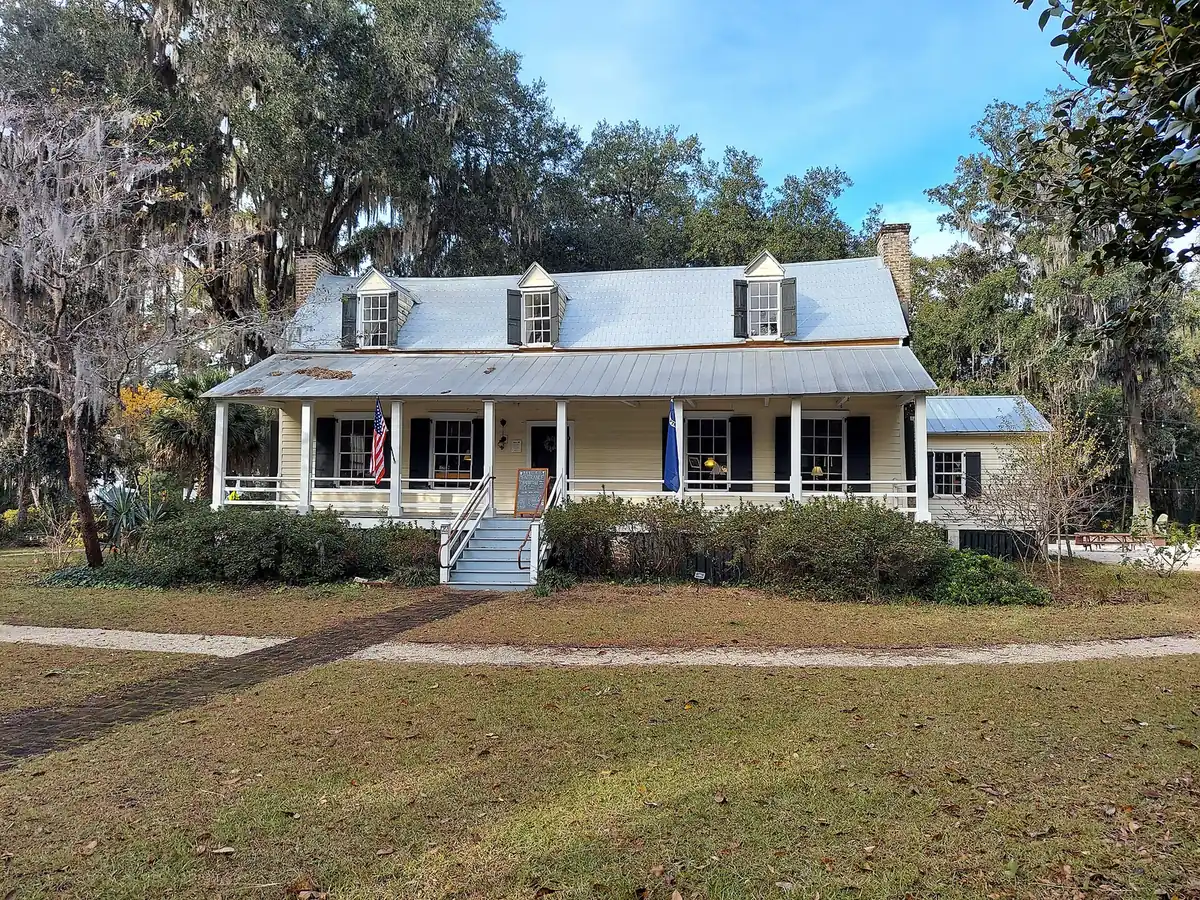
Bluffton was incorporated in 1852, burned in 1863 and listed as a National Register historic district in 1996. Its landmarks, museums and how to visit.
Last checked Oct. 12, 2026. Facts come from the Town of Bluffton’s About Bluffton and Historic District pages, the South Carolina Department of Archives and History’s National Register listings for Beaufort County and the National Park Service’s NPGallery.
Bluffton grew up on a bluff above the May River, which gave the town its name. In the early 1800s, planter families came to the high ground to build summer homes away from the heat and disease of the low rice and cotton plantations, the town says. The town seal reads “Established 1825,” and Bluffton was incorporated in 1852 as a one-square-mile river town.
Visit and learn more
- Town of Bluffton Welcome Center, Squire Pope Carriage House, 111 Calhoun St., 843-706-7800. Open 10 a.m. to 5 p.m. Monday to Friday and 11 a.m. to 5 p.m. Saturday; closed Sunday.
- Heyward House Museum and Historic Bluffton Foundation, 70 Boundary St., 843-757-6293
- Town historic preservationist: Glen Umberger, 843-706-4504
A short history
- Early 1800s: Planter families build summer homes on “the Bluff.” The river is the town’s link to other waterways; the Calhoun Street Dock was once a rest stop for boat travelers between Savannah, Beaufort and Charleston.
- 1844: Bluffton becomes a center of the separatist movement when U.S. Rep. Robert Barnwell Rhett speaks to about 500 residents under an oak tree to protest federal taxes. The town says the meeting gave birth to the secession movement that led South Carolina to leave the Union in 1860.
- 1852: The Town of Bluffton is incorporated.
- June 4, 1863: About two-thirds of the town is destroyed by fire during the Union’s Bluffton Expedition. Those who stayed were left destitute, and recovery took many years.
- 1878: Cyrus Garvin, a freedman, likely builds the house now known as the Garvin-Garvey House on land that had belonged to planter Joseph Baynard, according to the town’s timeline.
- 1880 to 1930: Bluffton is a commercial center for southern Beaufort County, the state’s National Register record says.
- 1996: The Bluffton Historic District is listed in the National Register of Historic Places.
- 1998 to 2019: Annexations grow the town from about 750 residents and one square mile to 54 square miles and more than 20,000 residents, the town says. The Census Bureau estimated 36,807 residents in 2025; see our population page.
National Register of Historic Places
From the South Carolina Department of Archives and History and the National Park Service:
| Listing | Where | Listed |
|---|---|---|
| Church of the Cross | Calhoun Street | May 29, 1975 |
| Rose Hill Plantation House | U.S. 278, Bluffton vicinity | May 19, 1983 |
| Bluffton Historic District | Roughly bounded by the May River, Huger Cove and Bridge Street | June 21, 1996 |
Church of the Cross. Completed in 1857 to a design by architect Edward Brickell White, the cruciform church is Carpenter Gothic, with a board-and-batten exterior of unfinished cypress and an open-timbered roof, set on a bluff above the May River among live oaks and palmettos. A parish house in a matching style was added in 1960.
Rose Hill Plantation House. A two-story Gothic Revival house believed built for Dr. John Kirk and his wife, Caroline, about 1858 to 1860. It stood unfinished until about 1946, when John and Florence Sturgeon bought and renovated it. It is a private residence.
Bluffton Historic District. The listing covers 1815 to 1945: 46 contributing buildings, two natural landscape features and 17 noncontributing buildings, mostly one- and two-story frame houses and stores on brick piers with full-width porches. Some show Queen Anne, Craftsman and Colonial Revival touches. The town counts more than 80 contributing historic structures in its own Old Town Bluffton Historic District, and Bluffton was named a Preserve America Community in 2005.
The state notes that most National Register properties are privately owned and not open to the public; please respect owners’ privacy.
Places you can visit
- Heyward House Museum, 70 Boundary St. Built in 1841 by enslaved West Africans, the house is now a museum and the starting point for walking and golf cart tours of the historic district, run by the Historic Bluffton Foundation. Tours last 1.5 hours and need 24 hours’ notice; call 843-757-6293. The foundation keeps the Caldwell Archives for research on historic properties.
- Garvin-Garvey House, Bridge Street at Wharf Street, in Oyster Factory Park. The town calls it one of the earliest known freedman-owned houses still standing on the May River, a Reconstruction Era hall-parlor house that stayed in the Garvin family until 1961. Beaufort County and the town restored it from 2016 to 2017. See the town’s Garvin-Garvey House page.
- Squire Pope Carriage House, 111 Calhoun St. It survived the 1863 burning, was bought by the town in 2017 and opened as the Town of Bluffton Welcome Center on Feb. 3, 2025.
- Church of the Cross, Calhoun Street. The church grounds overlook the May River; check with the church before visiting inside.
- Bluffton Oyster Company, Wharf Street, where, the town says, oystermen still bring May River oysters harvested by hand from small boats called bateaus.
The town’s Shell Art Trail page points to more.
Researching a house
Copies of the 1996 and 2008 statewide surveys of historic properties and the National Register nomination are available in the town’s Growth Management Department, according to the Historic Preservation Commission. The town also publishes a Bluffton Historic Resources Survey.
What this means for you
- Start at the Welcome Center on Calhoun Street or the Heyward House on Boundary Street.
- Book a guided district tour a day ahead.
- Most historic homes are private; enjoy them from the street.
Related: parks and trails, things to do this month and building permits and zoning, for work on historic buildings.
Frequently asked questions
When was Bluffton, SC, founded?
The Town of Bluffton was incorporated in 1852, and its seal reads “Established 1825.” Planter families began building summer homes on the bluff above the May River in the early 1800s, the town says.
What happened in the Burning of Bluffton?
On June 4, 1863, during the Civil War, Union forces burned about two-thirds of the town in what the town calls the Bluffton Expedition. It took many years for Bluffton to recover.
Is the Bluffton historic district on the National Register?
Yes. The Bluffton Historic District, roughly bounded by the May River, Huger Cove and Bridge Street, was listed in the National Register of Historic Places on June 21, 1996.
When was the Church of the Cross in Bluffton built?
It was completed in 1857 to a Carpenter Gothic design by architect Edward Brickell White, using unfinished cypress, and was listed in the National Register on May 29, 1975.
Have your say